

CO2-by-Rail: Fast-Tracked For Success (Ethanol Producer Magazine Article)
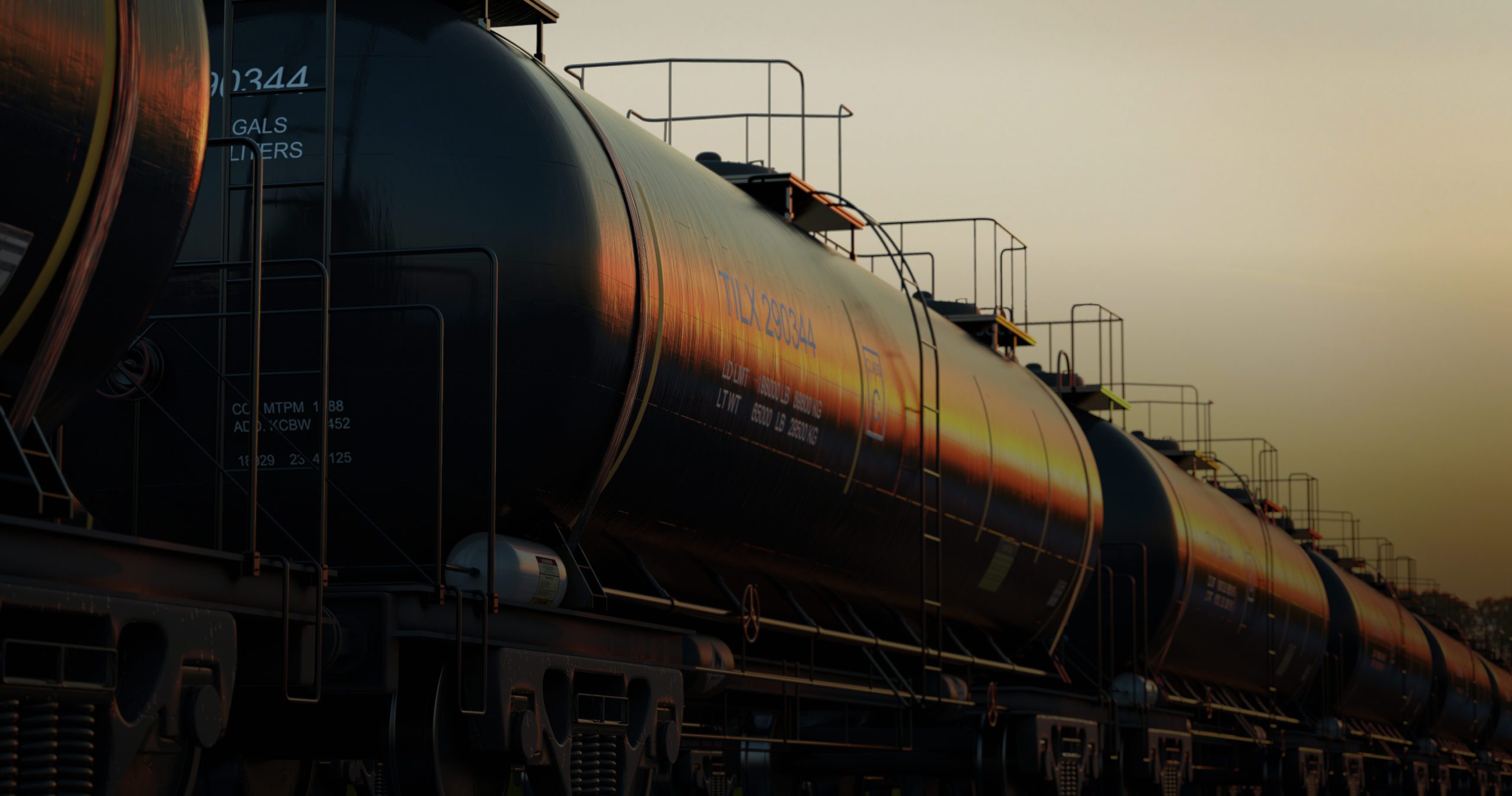
To help ethanol producers manage captured CO2, Frontier Carbon Solutions LLC is full steam ahead with a carbon-by-rail logistics operation that could serve producers from Illinois to California. Robby Rockey, CEO of Frontier Infrastructure Holdings LLC, the Tailwater Capital-backed parent company of Frontier Carbon Solutions, says the rail-based network could be up and running by the end of 2027.
“Our rail option is months away, not years,” Rockey says. Once operational, Frontier will load CO2 captured and liquefied at ethanol plants into railcars, transport it to Wyoming and inject it into a sequestration well.
The carbon-by-rail approach relies on existing rail lines and providers like Union Pacific and Norfolk Southern, as well as CO2 liquefaction infrastructure, specialized insulated railcars and a geologically suited Class VI sequestration well capable of storing CO2. All of that, according to Rockey, already exists and is ready for implementation into Frontier’s logistics network.
“This is such a big opportunity,” says Steven Lowenthal, co-CEO at Frontier. Carbon by rail is already happening across the country, he explains. “We can do this right now.”
A New Frontier
Rockey and Lowenthal formed Frontier roughly four years ago. Rockey is an engineer by trade with extensive experience in enhanced oil recovery and high-volume CO2 processing and handling throughout Wyoming and other states. Lowenthal’s expertise is in finance, private equity, tax credits and carbon financing. The greater Frontier team has worked with the Global CCS Institute, the University of North Dakota’s Energy and Environmental Research Center, the Enhanced Oil Recovery Institute and the University of Wyoming’s School of Energy Resources.
When Rockey and Lowenthal recognized that CO2 was becoming a liability instead of a commodity back in 2021, they knew there was an opportunity to provide a solution based on their experience managing carbon. According to Lowenthal, moving carbon by rail is less risky than moving it by pipeline. Rail has a lower upfront cost for carbon management, but a higher operating cost over time. In most cases, a pipeline requires a 15-year commitment, at minimum, for a developer to justify the buildout. With rail, that commitment can be as little as five years.
Although carbon by rail may be novel to ethanol-based carbon-management strategies, several industries have long relied on the concept, such as food and beverage, helium, mining and enhanced oil recovery. Lowenthal says equipment manufacturers in the space see carbon by rail as a promising and growing source of demand.
“Many are investing in this space,” he says.
Union Pacific, a long-time national rail line operator that serves 23 states and counting, has already partnered with Frontier.
Beth Whited, president of Union Pacific, says the rail giant’s network aligns geographically with permanent storage formations. “We are actively working with industry partners to develop future solutions,” she says.
Union Pacific even has a dedicated carbon-by-rail team now. According to the company, tank cars are the ideal solution for transporting liquid CO2, with a capacity of 80,000 metric tons of the inert, non-flammable gas.
“Crude by rail seemed like a wild idea 20 years ago,” Rockey says. “But today it is very normal.”
As recently as 2024, the Kleinman Center for Energy Policy, released a report outlining carbon by rail. The rail industry has safely transported liquefied CO2 for decades at an estimated 1.2 million tons annually, the report’s authors said. Rail also has a low incident rate regarding CO2 release during transport, and (due to low volumes moved per tanker), rail has an ideal safety record for communities unfamiliar or concerned with CO2 transport.
Alina Ho, an author of the report, said rail transport has a meaningful and complementary role in carbon management supply chain logistics and, under the right conditions, “it should be considered the first option for CO2 transport—not a backup plan.”
Rail To Sequestration
The process of capturing carbon and transporting it via rail is somewhat straightforward, Rockey says. Liquefaction skids are placed adjacent to a CO2 stack. The liquified CO2 is then stored in tanks prior to transfer to railcars. The U.S. Department of Transportation requires DOT-105 or DOT-112 railcars to move such gases. Either option is suitable for transporting liquefied compressed gases under pressure. The Railway Supply Institute says 105 or 112 cars already make up roughly 20% of the existing North American tank car fleet.
Frontier’s team is completing a massive, multi-purpose carbon storage hub in Southwest Wyoming called the Sweetwater Carbon Storage Hub. The hub has already obtained three Class VI underground injection permits. Once complete, it will store more than 350 million metric tons of CO2 across a 100,000-acre network. The SCS hub will offer the capacity to sequester 10 million tons annually.
To connect CO2 producers from across the Midwest and the west to the hub, Frontier has also built the Granger Carbon Terminal in Wyoming. According to the company, the terminal is the world’s first large-scale rail-to-sequestration offloading facility. If a CO2 emitter can capture CO2, transport it via rail to the Granger site, Frontier can then move the CO2 through Granger and sequester or store that carbon within its SCS hub.
Rockey says the communities of Southwest Wyoming where the SCS hub exists are using CO2 in a variety of industries from helium production to natural gas mining to enhanced oil recovery. CO2 brought there is welcome, he says.
Connecting With Infrastructure
When the Frontier carbon-by-rail system starts rolling in 2027, Rockey says the team would like to be in a seven- to eight-day loaded transit to destination schedule.
“We are really good at moving the molecule and getting it into the ground,” Lowenthal says.
Determining if a plant can participate in Frontier’s system is relatively simple and quick. Lowenthal and team need to know about existing liquefaction infrastructure and rail access.
“We can give you a pretty good read of viability in a day or less,” he says of potential ethanol clients.
Frontier is already adding ethanol producers to the network today. Some may need track upgrades or added liquefaction capabilities. The team will work with a producer in one of two ways. Through a transportation model, Frontier will provide a fee-for-service. Frontier will take the liquified CO2 from the plant, transport it to Wyoming and store it. In a more involved approach, Lowenthal is also willing to explore funding a joint venture or establishing a shared investment with an individual producer.
Despite its focus on ethanol, Frontier has already gained support from other major names across industries. In addition to their formal work with Union Pacific, Frontier is also collaborating with Baker Hughes, a global oil and gas technology and services company; Prometheus Hyperscale, and PureWest Energy. In addition, Frontier will supply 120,000 tons of carbon credits generated through bioenergy with CCS to Wild Assets, a global asset manager for CO2 removal credits. Gevo, along with its Verity platform used to manage and generate carbon tax credit monetization, is also working with Frontier.
“Our collaboration with Gevo and Verity eliminates the primary barriers facing ethanol producers in carbon management,” Lowenthal said at the time of the announcement in September last year. “By combining rail flexibility with proven sequestration and transparent tracking, we’re enabling facilities to start capturing value from their CO2 streams within 24 months rather than waiting years for alternate approaches.”
Some ethanol producers, such as Nebraska-based Midwestern Renewable Energy, have already gone public with their intent to use the Granger Carbon Terminal.
“This partnership fundamentally changes the economics and timeline for carbon management in the ethanol industry,” according to Jim Jandain, CEO of Midwest Renewable Energy. “Having rail transportation, permanent sequestration and Verity’s digital verification in one integrated solution means we can move from decision to implementation in under 24 months. For MRE, this is about securing our position in the low-carbon fuel market while that window is still open.”
When Rockey and Lowenthal first started building out Frontier Infrastructure four years ago, they admit ethanol wasn’t the main focus.
“Now, though, we’ve seen this as such a big opportunity and an industry that has a need that aligns with our skillset and offering,” Rockey says.
Frontier is in discussions with several other ethanol plants. “The thing that has us excited about this is that it is all absolutely possible, and we can do it right now,” Lowenthal says.
Rockey believes in the experienced team behind the scenes, citing their time in CO2 sequestration. Lowenthal says the team’s ability to manage the 45Z portion of the process makes them ideal for CO2 management. When asked about expansion plans, both say they aren’t ruling out the day when full unit trains (100-plus rail cars) carry liquefied CO2 from places as far east as Illinois or as far west as California to southwest Wyoming for storage and sequestration. But until then, Rockey’s message about the near-term future of carbon by rail is clear.
“We are ready to go, and we are ready to open for business.”